Founders hiring a few people a year can start with a shared spreadsheet or free ATS. Several open roles and interviewers usually call for a dedicated ATS; regular monthly hiring may justify a recruiter. If you run an agency, jump to selling to startups. Longlist makes agency software, so the founder ATS options here are other companies’ products.
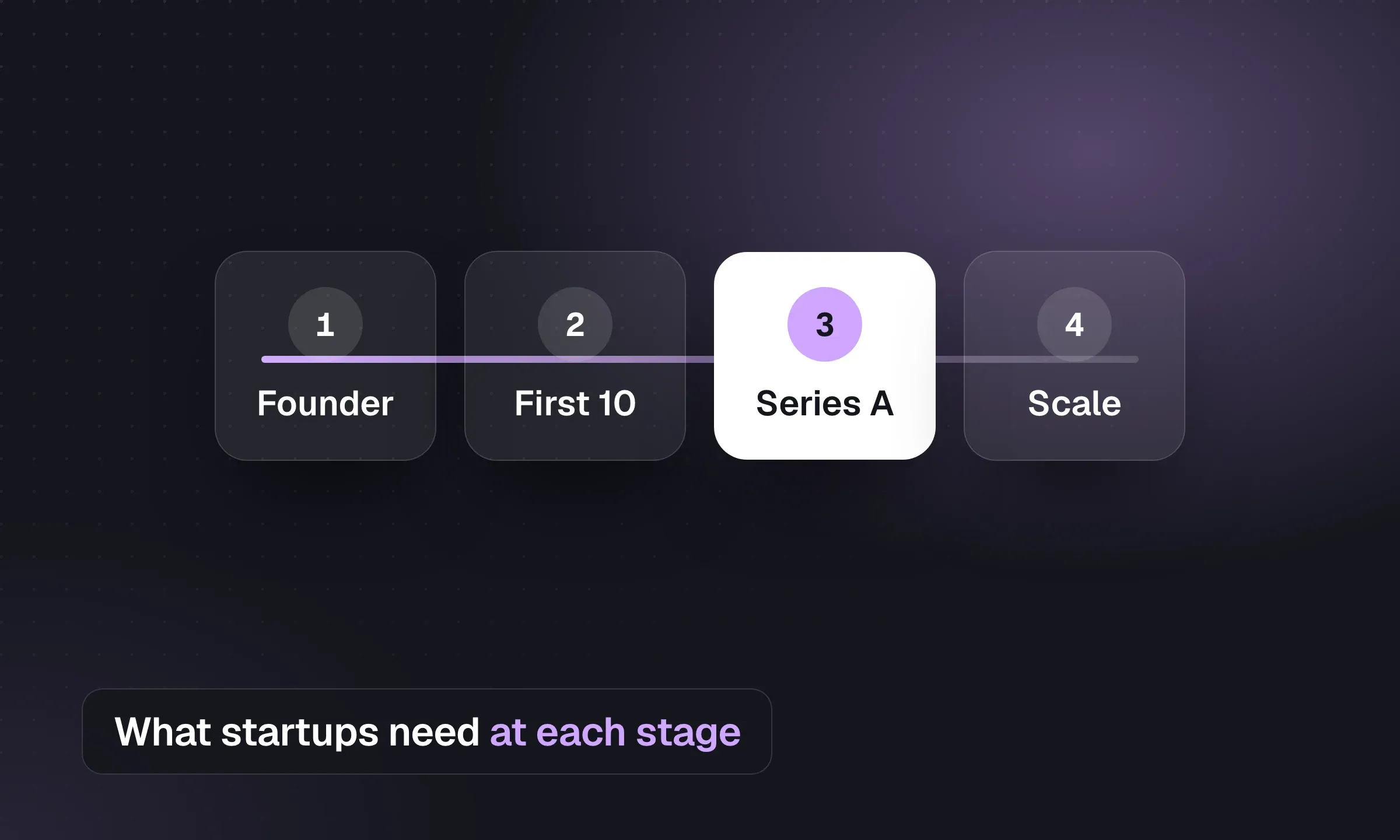
The stack by stage
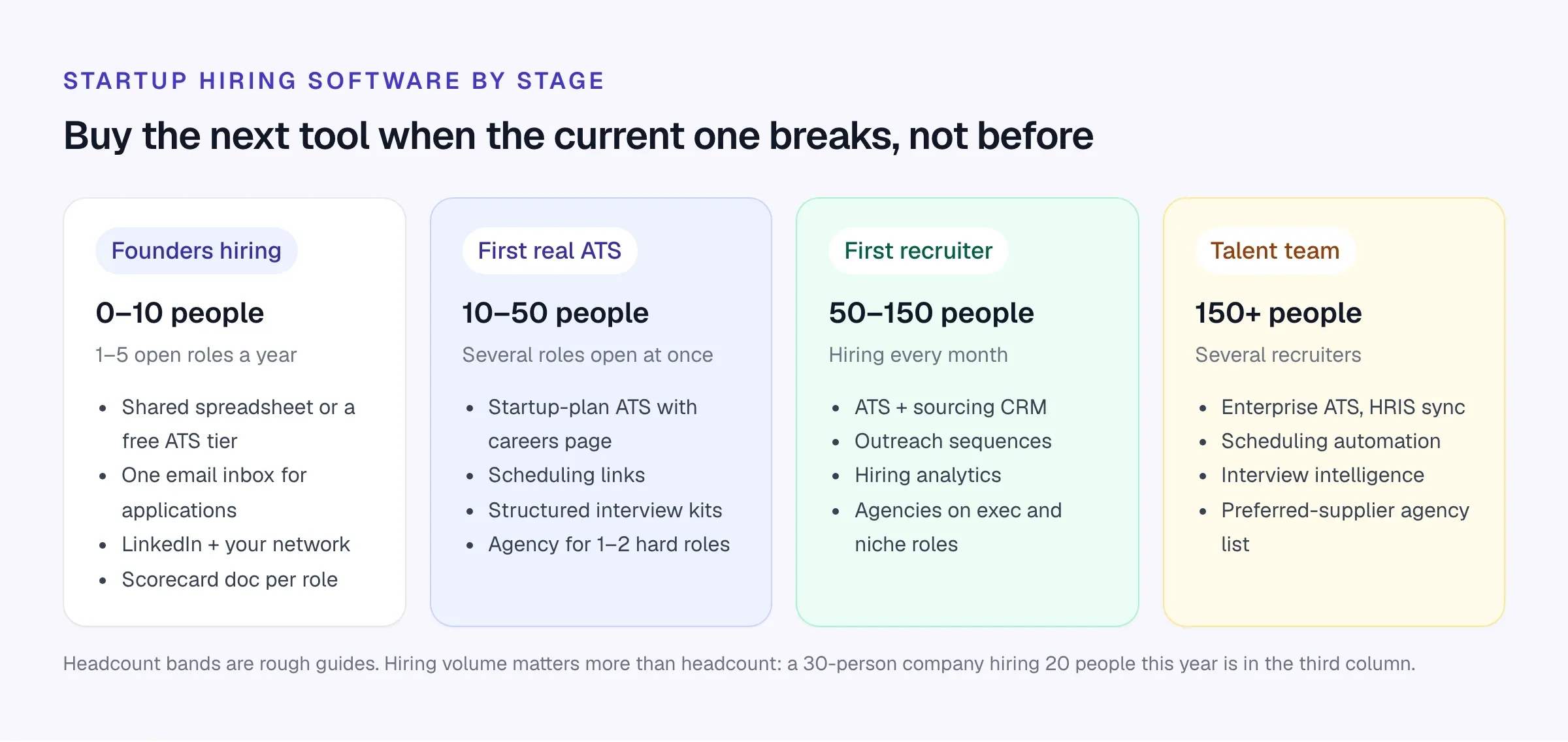
Stage 1: founders hiring (roughly 0 to 10 people)
You’re hiring one to five people a year, mostly from your network. Keep the process simple:
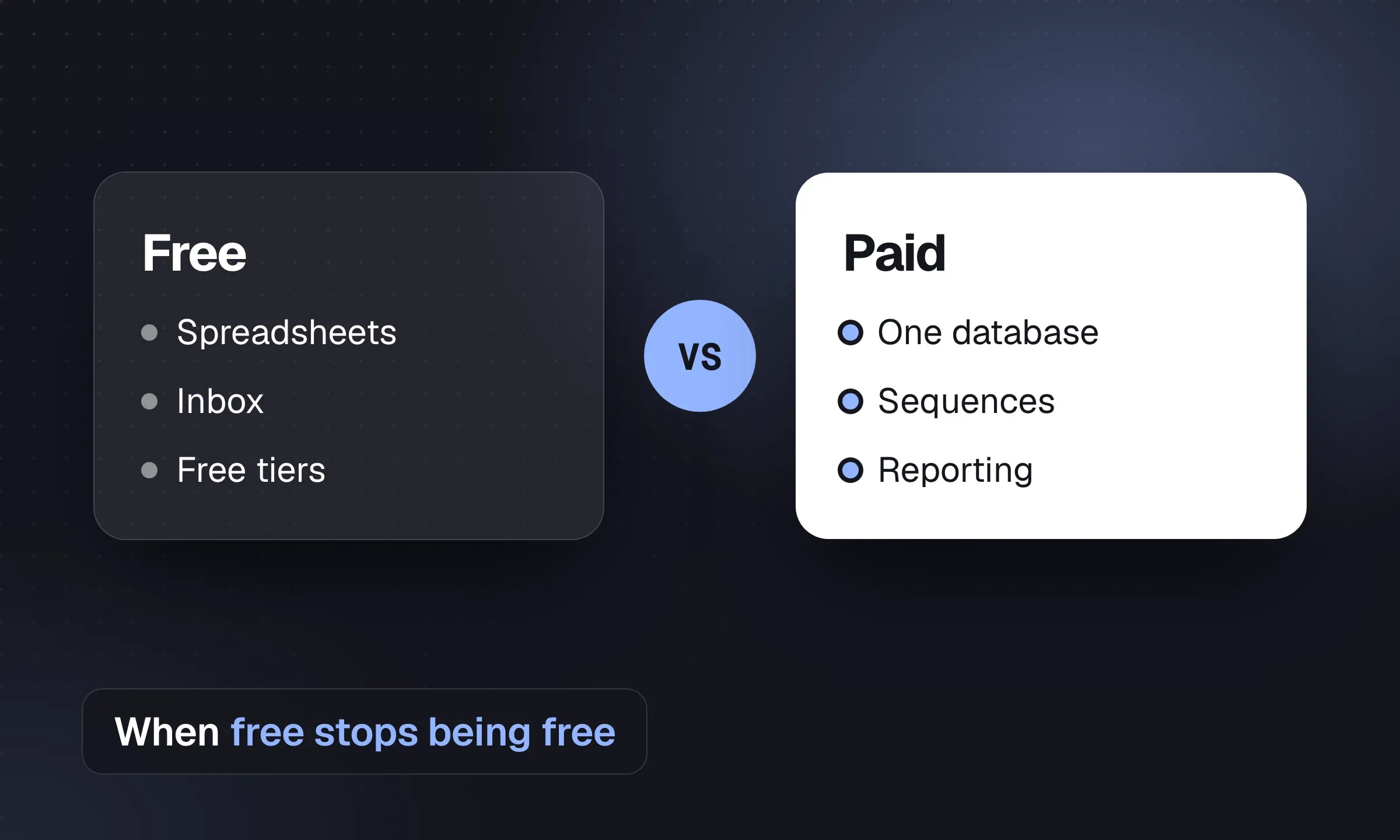
- One place for every candidate. A shared spreadsheet with name, role, source, stage, next step, owner and date. Or a free ATS tier.
- A written scorecard per role. Four or five things the person must be able to do, agreed before the first interview.
- A reply rule. Every applicant hears back within a week, even if it’s a no.
Free options worth knowing, as published in October 2026 (our free recruiting software guide has more):
Breezy HR
Website ↗- Best for
- Founders hiring one role at a time
- Pricing
- Free Bootstrap plan; Startup plan listed at $157–$189/month
The free Bootstrap plan allows one active position (or candidate pool) at a time, with access limited to candidates added in the last 30 days. Paid plans add unlimited positions, automations and interview self-scheduling.
Zoho Recruit
Website ↗- Best for
- Startups already using Zoho apps
- Pricing
- $0 free plan (one recruiter seat)
The free plan covers one recruiter seat but no resume parser. Paid plans add parsing and more users, and Zoho’s other apps connect easily if you already run your company on them.
Stage 2: your first real ATS (roughly 10 to 50 people)
The signs you’ve outgrown the spreadsheet: three or more roles open at once, several interviewers, candidates waiting for replies, and nobody sure who was meant to send the rejection. Buy an ATS with a careers page, interview kits and scheduling.
Ashby
Website ↗- Best for
- Venture-backed startups that want analytics from day one
- Pricing
- Foundations from $400/month (up to 100 employees)
All-in-One Foundations is Ashby’s startup plan, for companies up to 100 employees, shown at $400 a month with 10% off annual billing. ATS, scheduling, sourcing CRM and analytics in one product. Larger plans are quoted.
Workable
Website ↗- Best for
- Small companies that want job distribution and a simple ATS
- Pricing
- Standard from $299/month
Standard starts at $299 a month (or $3,588 a year), with Premier at $599; price depends on your employee band. A 15-day trial with the Standard feature set, no card needed.
Gem
Website ↗- Best for
- Startups that will source heavily and want CRM and ATS together
- Pricing
- Free for six months under 30 employees, then 50% off
Gem’s All-in-One plan (ATS, sourcing, CRM, scheduling, analytics) is free for six months for companies under 30 employees, then 50% off a paid plan; companies with 30 to 100 employees get reduced rates. Standard pricing is quoted by headcount.
What to check before you sign: annual vs monthly terms, how the price changes when you cross an employee band, and whether you can export candidates and interview feedback if you switch.
Stage 3: your first recruiter (roughly 50 to 150 people)
Now you’re hiring every month. Add:
- Sourcing and outreach. A sourcing CRM with email sequences, often part of the ATS at this point.
- Hiring analytics. Time in stage, pass-through rates by interviewer, offer acceptance.
- A recruiter who owns the process. Give someone responsibility for follow-ups, interview progress and decisions. The research section below includes time-to-hire figures for startups with and without recruiter involvement.
Agencies are still useful here, typically for leadership hires and specialist roles the recruiter can’t cover alongside a full desk.
Stage 4: a talent team (150+)
Several recruiters, an enterprise ATS (Greenhouse, Ashby’s larger plans and others) synced to your HR system, scheduling automation, interview intelligence or note-taking tools, and a short preferred-supplier list of agencies with agreed terms.
When a startup should use an agency
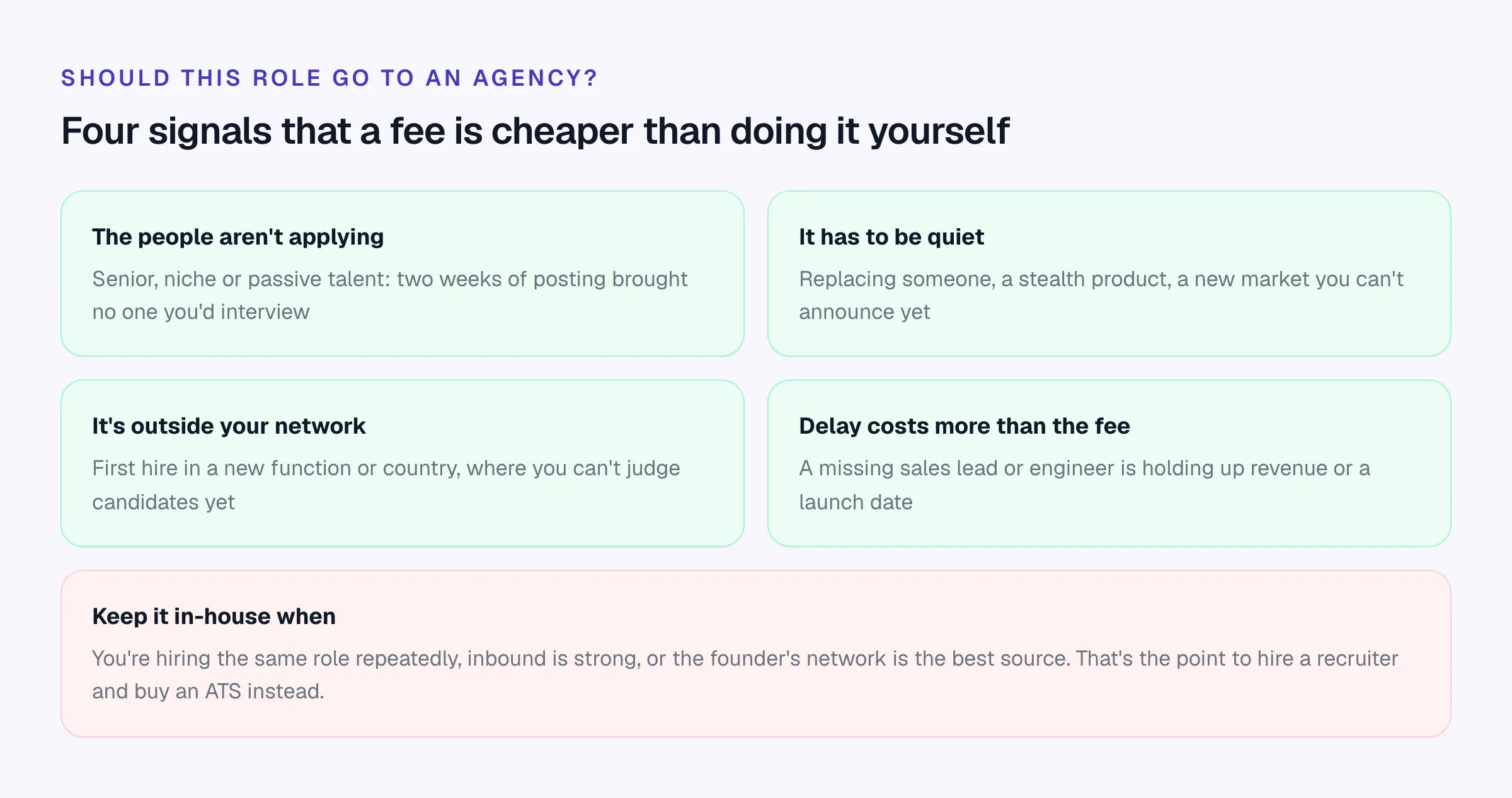
An agency fee is easier to justify when a role needs specialist reach or a confidential search. Ashby’s inbound research found 43–52% of hires at its customers came from inbound applications between 2021 and 2025 (Ashby, 2025). The roles that don’t fill from inbound are where an agency earns its fee: senior people who aren’t looking, specialists in a small market, confidential replacements, and first hires in a function or country where the founders can’t yet judge candidates.
Use an agency
- Senior or niche role with no qualified applicants after two weeks
- Confidential search (replacing someone, stealth project)
- First hire in a new function or country
- A missing hire is delaying revenue or a launch
- You need a shortlist in two to three weeks, not two months
Keep it in-house
- The same role, hired repeatedly
- Strong inbound and referrals for this kind of role
- The founder’s network is genuinely the best source
- Junior roles where volume screening matters more than reach
- Your recruiter has capacity
The arithmetic
Agency fees vary by market and seniority, so use the quotes you actually receive. For illustration only, assume a contingency fee of 20% of first-year base salary:
- One senior engineer at a $180,000 base: 20% × $180,000 = $36,000, paid when they start.
- Five such hires in a year: 5 × $36,000 = $180,000.
Now compare with hiring a recruiter. If a recruiter costs you X a year fully loaded (salary, taxes, tools), in-house wins once your agency spend would exceed X, which is X ÷ $36,000 hires a year at the illustrative fee. Assume, again for illustration, a fully loaded cost of $150,000: 150,000 ÷ 36,000 ≈ 4.2, so from about five senior hires a year the recruiter is cheaper on paper. The trap is that a recruiter is great at repeatable roles and often slower than a specialist agency on the one-off senior search. So most startups end up doing both.
- Write the scorecard first: four or five outcomes the hire must deliver in their first year
- Agree the salary range and equity range before the agency starts calling people
- Name one decision-maker and commit to feedback within 48 hours of each CV
- Agree the interview stages and dates in advance
- Ask for the fee, payment trigger and guarantee (replacement or refund period) in writing
- Give exclusivity for a short window (two to four weeks) in exchange for a committed shortlist date
- Tell the agency which companies they must not approach (clients, partners, investors’ portfolio)
What startup hiring looks like in the data
Ashby, an ATS used by many venture-backed companies, published its State of Startup Hiring report in February 2026, covering more than 1,200 startups and mostly 2025 data:
- 298 inbound applications per hire at startups under 25 employees (Ashby, 2026)
- 42 days average time to hire with a recruiter involved, against 62 days without, at startups under 25 (Ashby, 2026)
- ~80% offer acceptance rate at startups (Ashby, 2026)
- 60% of startup customers used AI features in Q3 2025, rising with company size (Ashby, 2026)
Two things follow. First, the early bottleneck is often screening, not sourcing: at two minutes per application, 298 applications is close to ten hours of reading for one hire. Second, Ashby’s sample shows shorter hiring times where a recruiter was involved. That is an association to consider alongside your hiring workload, rather than a promise that adding a recruiter will produce the same result.
For agencies: selling to startups
Startups are attractive clients for agencies (they hire in bursts, they pay for speed, and their first employees become future hiring managers) and frustrating ones (slow feedback, shifting briefs, salary ranges that don’t match the market, and equity that candidates can’t value). A few things that help.
Calibrate before you source. Founders often can’t describe the hire until they’ve seen three candidates. Send two or three calibration profiles in the first week and ask what’s right and wrong about each. It saves the month you’d otherwise spend sending the wrong shortlist.
Explain equity in plain numbers. Candidates will ask what 0.1% of a seed-stage company is worth. Agree with the founder how to describe it (percentage, strike price, vesting, latest valuation if they’ll share it) before the first call.
Offer structures that fit. A short exclusive window with a shortlist date, a staged fee for senior roles (part on engagement, part on shortlist, the rest on start), and a guarantee period the founder understands. For leadership hires, a retained process works better; see our executive search workflow and the software search firms use.
Report weekly, in one message. Agree an update format the founder will actually read. A weekly email with the pipeline (approached, interested, submitted, interviewing) and the one decision you need from them gets answers. When you do submit, send a short cover page with the scorecard match up front; our candidate submission template has one.
First email to a startup founder after a funding announcement
Subject: Your first [function] hire
Hi [First name],
Congrats on the [round]. Usually the first hire after a round is [role, e.g. “a senior backend engineer who can own payments”], and it’s the one that’s hardest to fill from inbound.
I recruit [function] for [stage] startups in [city/region]. In the last year I’ve placed [number] people in roles like [one or two real examples, anonymised if needed].
If [role] is on the plan, I can send you three calibration profiles this week, no fee unless you hire, so you can see whether my read of the market matches yours.
Worth 15 minutes on [day]?
[Name]
Use your own placements in that email, not invented ones; founders check. For more on finding and approaching clients, see how to find clients for a recruitment agency, recruitment lead generation and our cold calling scripts. Follow-ups belong in a sequence; our email sequence templates include a client-side one.
What to record for each startup client
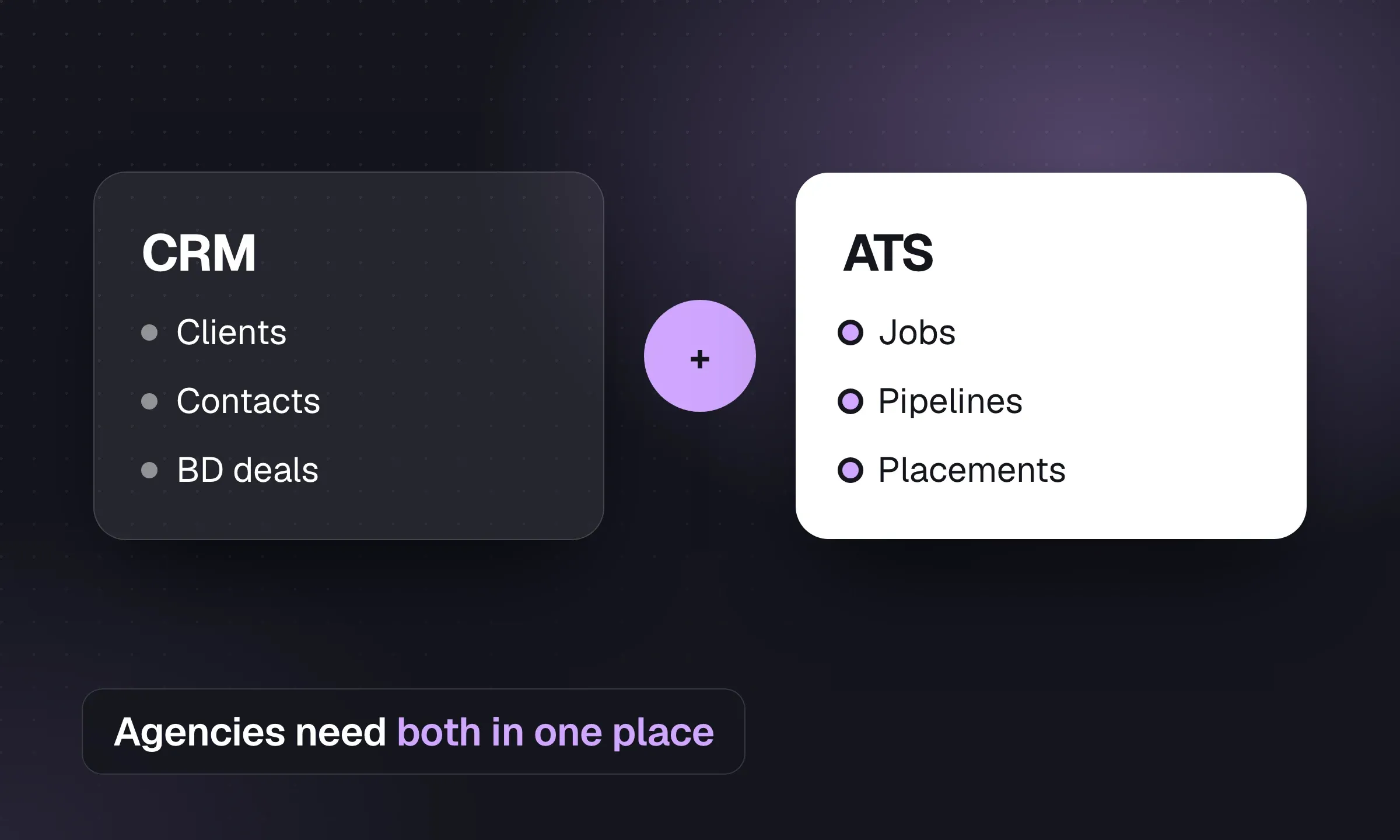
Funding stage and date, investors, headcount, hiring plan, salary and equity bands, decision-makers, feedback speed and the roles they’ve filled without you. When they raise again, that record tells you who to call and what to pitch. A CRM built for agencies keeps this on the company record alongside the contacts, deals, jobs and placements; the CRM vs ATS guide explains why agencies need both halves.
The software we recommend for agencies selling to startups
Startup work is a BD-heavy, relationship-heavy desk: you pitch after a round, calibrate on a few profiles, submit a tight shortlist and stay close for the next raise. That’s the workflow Longlist is built around, so it’s our pick. For a wider comparison, see recruitment agency software compared.
Longlist
Learn more →- Best for
- Agencies and search boutiques placing into startups
- Pricing
- From $47/user/month
Companies, founder and hiring-manager contacts, BD opportunities, jobs and candidates in one database, so the founder you pitched after the seed round is one click from the engineers you’d put in front of them.
An opportunities board tracks each deal from first conversation to won brief. BD campaigns and email sequences send from your own Gmail or Outlook, follow up in the same thread and stop on reply.
AI CV parsing with no per-CV charge, branded CV packs for every submission, a careers page eligible for Google for Jobs, a Chrome extension for contact lookup, and BD and client activity reports.
Calling, SMS and WhatsApp on Plus. Monthly billing, free migration, 24x6 human support and a 14-day trial.
Win and run startup clients in one place
Track startup clients from first conversation to won brief, run follow-ups that stop on reply, and send branded CV packs, in one CRM + ATS built for agencies.