Hiring managers should be able to tell which roles you recruit, where you work and why they should trust you. Make that clear in your positioning, back it with useful market evidence and keep showing up between vacancies. A small routine your consultants maintain is more useful than a burst of posts followed by silence.
Why agencies need marketing at all
Most hiring managers on your target list are not hiring for your roles this month. When they are, they’ll call the agency they remember, or the one that happens to call them that week.
- 95% of B2B buyers are out of market at any given time, according to the “95:5 rule” from LinkedIn’s B2B Institute and the Ehrenberg-Bass Institute (2021)
- 1 billion+ members in 200+ countries and territories on LinkedIn, per LinkedIn’s own figures (checked October 2026)
The 95:5 rule was written about B2B purchasing in general, not recruitment specifically, but the logic carries over: at any moment, a small slice of your market is hiring. Outbound BD finds that slice. Marketing helps you stay familiar to the accounts that are not ready to hire yet; the 95% figure is not a measured share of your own recruitment market.
1. Positioning: one line everyone can say
If a hiring manager can’t tell within five seconds what you do and for whom, nothing else in this playbook works.
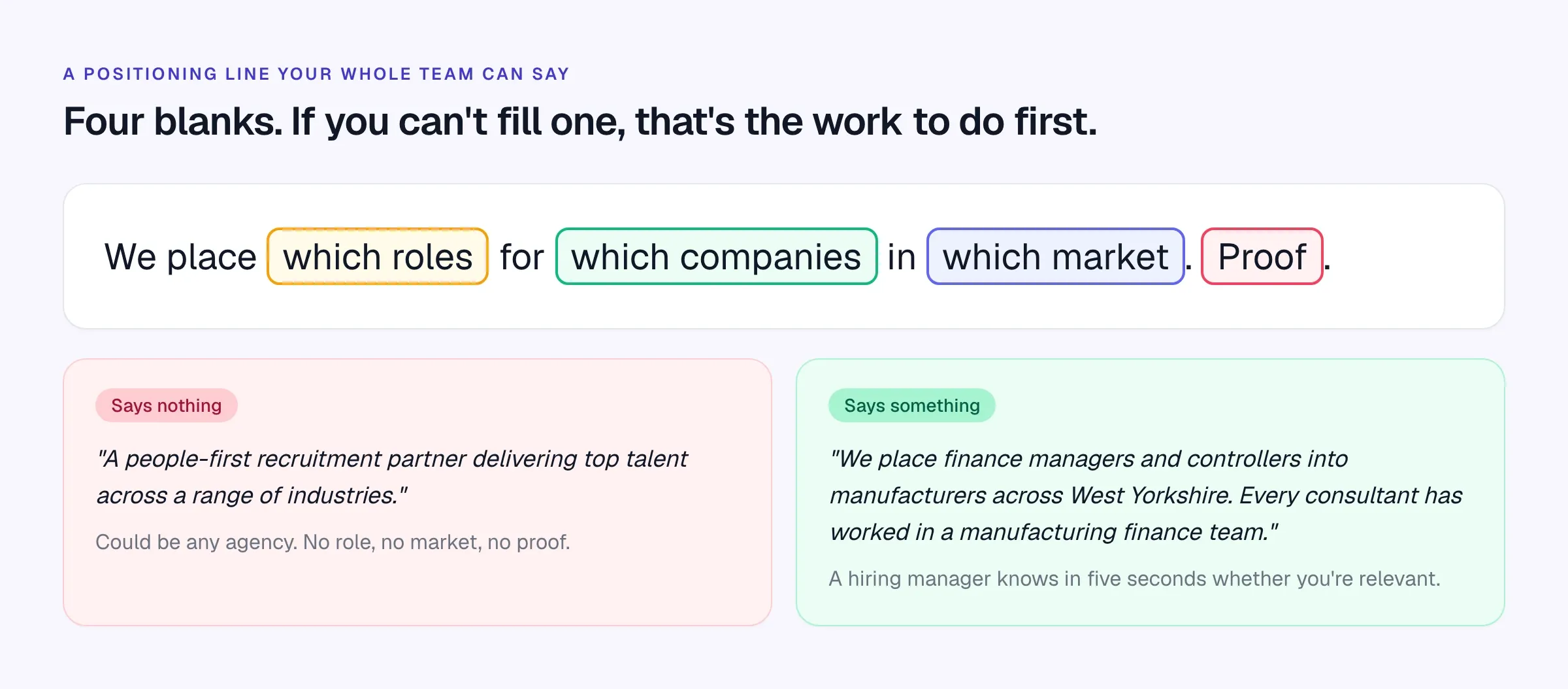
How to write yours:
- Look at the last 20 placements. What roles, which companies, where? Your real niche is often narrower than the one on your website.
- Fill the four blanks with what’s true today, not what you’d like to be.
- Find one piece of proof you can repeat on any call: consultants’ background, years in the niche, size of your candidate network, a repeat client you’re allowed to name.
- Test it out loud. Every consultant should be able to say it on a call without sounding like they’re reading.
Then put it everywhere: website headline, LinkedIn headlines, email signatures, the opening line of BD calls. Consistency is what makes it stick.
Generic positioning
- “Your trusted talent partner.”
- Sectors listed: 12.
- Proof: “passionate about people.”
- Hiring managers can’t tell you apart from the last three agencies.
Specific positioning
- “Quality and regulatory hires for medical device companies in Texas.”
- Sectors listed: 1, with 3 role families.
- Proof: “Two of our three consultants ran quality teams.”
- Hiring managers know whether to take the call.
2. Make your website do one job well
Your website exists to confirm what a hiring manager heard on the phone or saw on LinkedIn. It doesn’t need to be large. It needs:
- A homepage headline that is your positioning line.
- One page per niche with the roles you place, the companies you place them with, and a named consultant to contact.
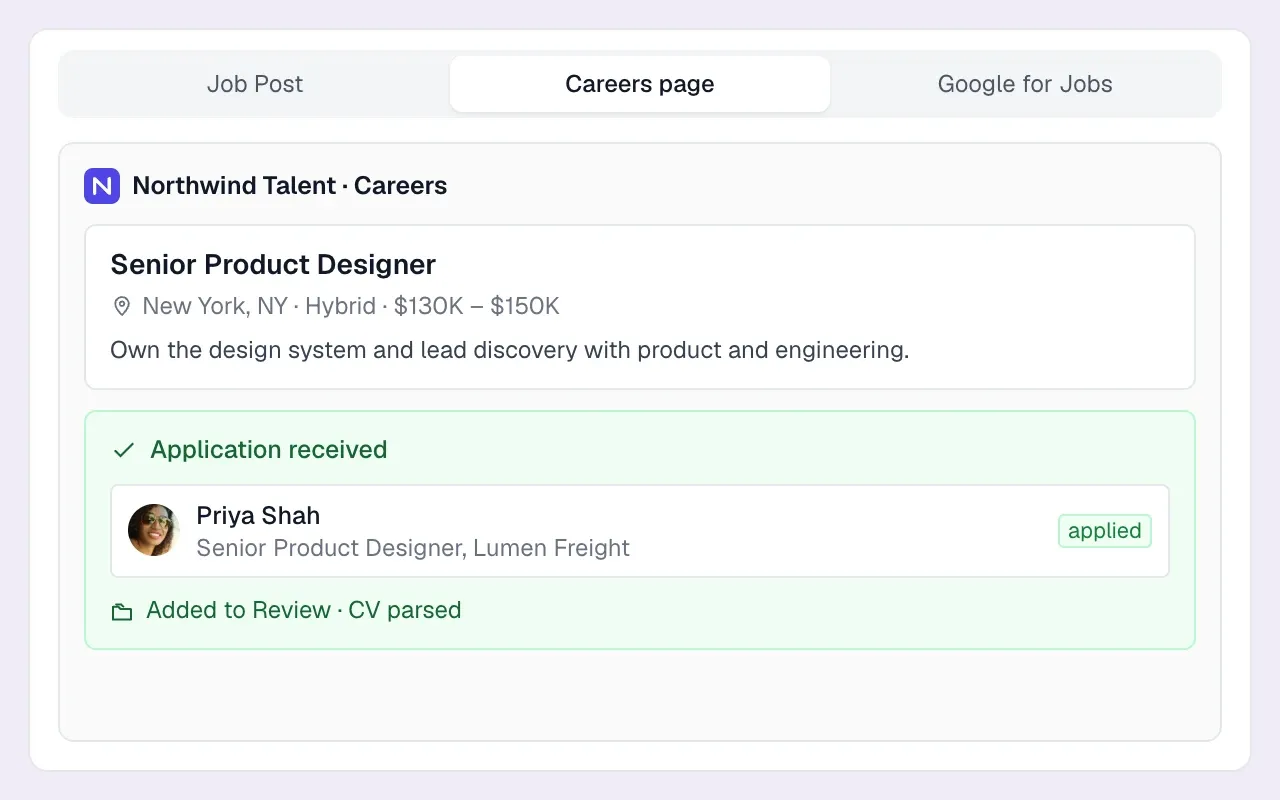
- Live jobs, because a current job list proves you’re working the market. A careers page built for Google for Jobs also brings in candidates.
- Proof: case studies, client names you have permission to use, consultants’ backgrounds.
- One useful resource, such as a salary guide or market note, with a simple form.
- Clear contact routes: a phone number, a named person, a short form.
3. LinkedIn: the consultants are the channel
For most agencies, consultants’ personal profiles reach more of the right people than the company page does. Their networks are made of the exact candidates and hiring managers you want. The job is to give them a routine they can keep up.
Fix the profile first
A consultant’s profile is a landing page. When a hiring manager gets a call, they look it up.
- Headline: the positioning line, personalized. “I place finance managers and controllers into manufacturers across West Yorkshire.”
- About section: three short paragraphs. Who you help, how you work, how to reach you.
- Featured: the salary guide, a recent market note and a live job.
- Experience: the relevant background that makes them credible in the niche.
Post twice a week, about the market
Posts that work for recruiters are specific and useful to hiring managers or candidates in the niche:
- Market notes. “Three things I heard from 30 finance director calls this month.”
- Salary and notice data from your own placements, with ranges rather than individual figures.
- Anonymized candidate profiles, only with the candidate’s agreement: “Management accountant, food manufacturing, 4 weeks’ notice, looking for more commercial input.”
- Behind the search. What made a hard role hard, and what worked (without naming anyone who hasn’t agreed).
- Live jobs, written for the reader, not pasted from the spec.
LinkedIn post: monthly market note
I spoke to 34 finance managers and controllers in West Yorkshire manufacturing this month. Three things stood out:
- [Observation, e.g. most people open to a move are asking about hybrid first, salary second.]
- [Observation with a number from your own data, e.g. of the 9 offers we saw, 4 were countered.]
- [Observation hiring managers can act on, e.g. roles with a clear first-year plan are getting faster yeses.]
If you’re hiring in finance this quarter and want the full picture for your area, message me and I’ll send it over.
Spend as long engaging as posting
Fifteen minutes, twice a week, commenting usefully on posts from people on your target account list does more than another post. Connect with target contacts with no pitch in the note. The pitch comes later, by phone or email, with a reason.
4. Content that gives you a reason to call
The best agency content does double duty: it’s useful to hiring managers, and it gives consultants a reason to pick up the phone. “We’ve just published Q4 salary data for controllers in your area. Want me to send the section for your team?” is a far better opener than “just checking in”.
Three formats cover most agencies:
Scroll the table to see all columns →
| Format | Effort | How it’s used in sales |
|---|---|---|
| Monthly market note | 1–2 hours | Newsletter, LinkedIn post, talking point on every BD call |
| Salary guide | A few days, yearly | Gated download, a reason to contact every Tier B account |
| Hiring guides | A day each | “How to hire a controller” pages for the niche; sent after discovery calls |
Build each from your own data where you can: placements, offers, counter-offers, notice periods. Your CRM already holds much of it. Keep the claims honest; a small, real dataset is more credible than a big, borrowed one.
5. Case studies without invented numbers
Hiring managers want evidence you’ve solved a problem like theirs. A short, specific case study beats a page of testimonials, and it doesn’t need dramatic numbers. It needs a recognizable situation.
Case study structure
Title: How we filled [role] for a [type of company] in [time]
The situation (2–3 sentences) What the client needed and why it mattered. E.g. a new site opening in four months with no site finance lead.
What made it hard (2–3 sentences) The real constraint: a thin local market, a salary below market, a niche skill.
What we did (3–5 bullets) How you searched, who you approached, how you presented the shortlist, how you handled the offer.
The outcome (2–3 sentences) Facts you can stand behind: shortlist delivered on day X, offer accepted, still in role after 12 months. Add a quote only if the client has approved it.
Get written permission before naming a client or using a quote. If you can’t name them, describe them (“a 400-person food manufacturer in West Yorkshire”) and keep the details accurate.
6. Email: a newsletter and a few good sequences
Email does two jobs for an agency.
A monthly client newsletter. The market note, two or three anonymized candidate profiles (with consent), and one live role. Send it to clients and prospects who’ve agreed to receive it or where your local rules allow B2B marketing email, with a clear unsubscribe. Replies are the metric, not opens.
BD and nurture sequences. Short, personal sequences for specific situations: a new signal at a Tier A account, a past client who’s changed jobs, a quarterly check-in with Tier B. The recruitment email sequence templates include client BD, reactivation and post-placement sequences, plus deliverability basics.
Run sequences from the CRM
Send BD and nurture sequences from your own Gmail or Outlook, with follow-ups that stop when someone replies and replies logged on the contact record.
7. Referrals: ask on purpose
Referrals arrive with some trust already built, and most agencies leave them to chance. Make the ask part of the process: after a successful first month, at the end of the rebate period, and whenever a placed candidate is promoted. The lead generation guide has referral-ask templates for clients and candidates.
Keep it easy to say yes. “Who else in the business is hiring in operations?” is easier to answer than “Do you know anyone who might need our services?”
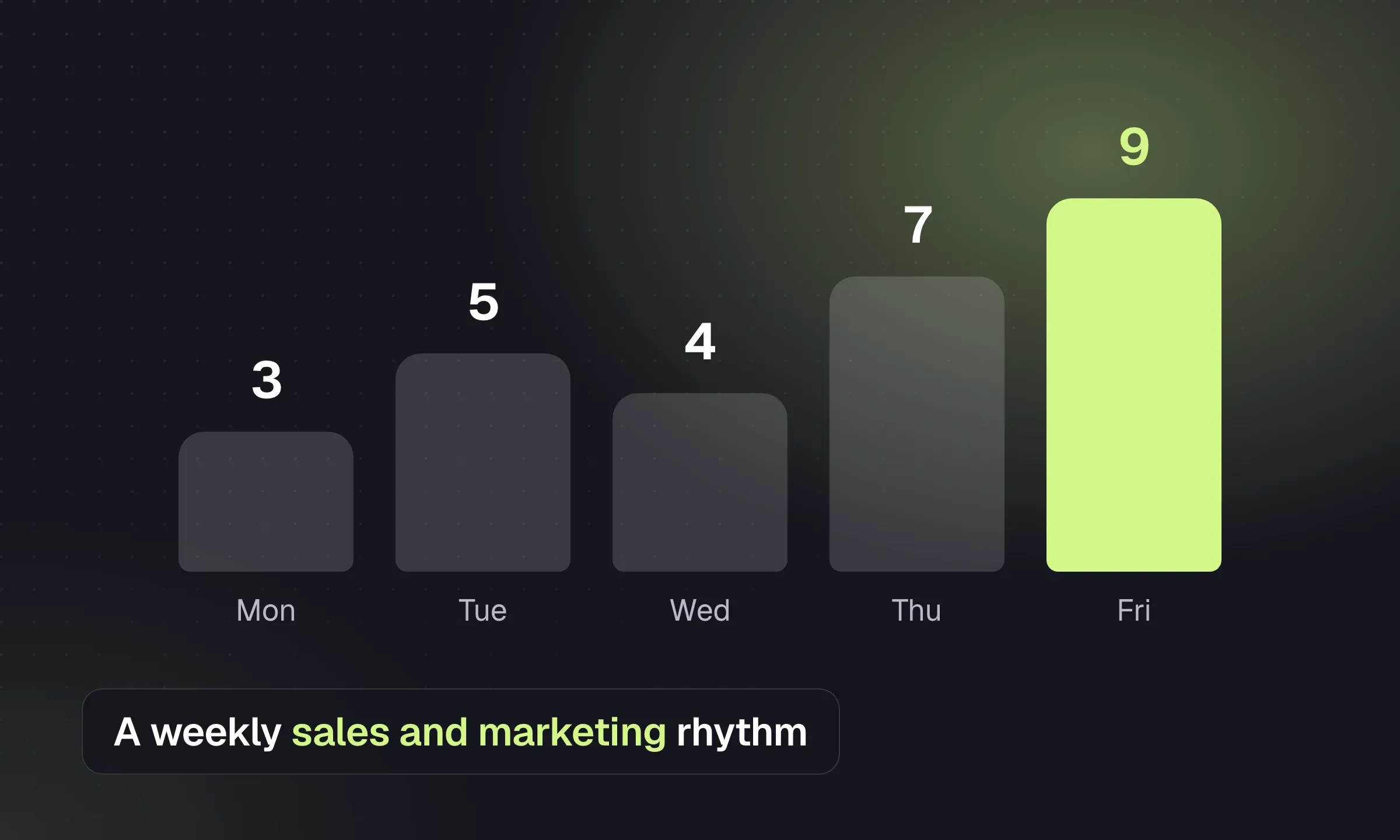
8. A weekly rhythm that survives busy weeks
Marketing in recruitment usually fails the same way: a burst of posts in January, nothing by March. Fixed, small blocks work better than occasional pushes.
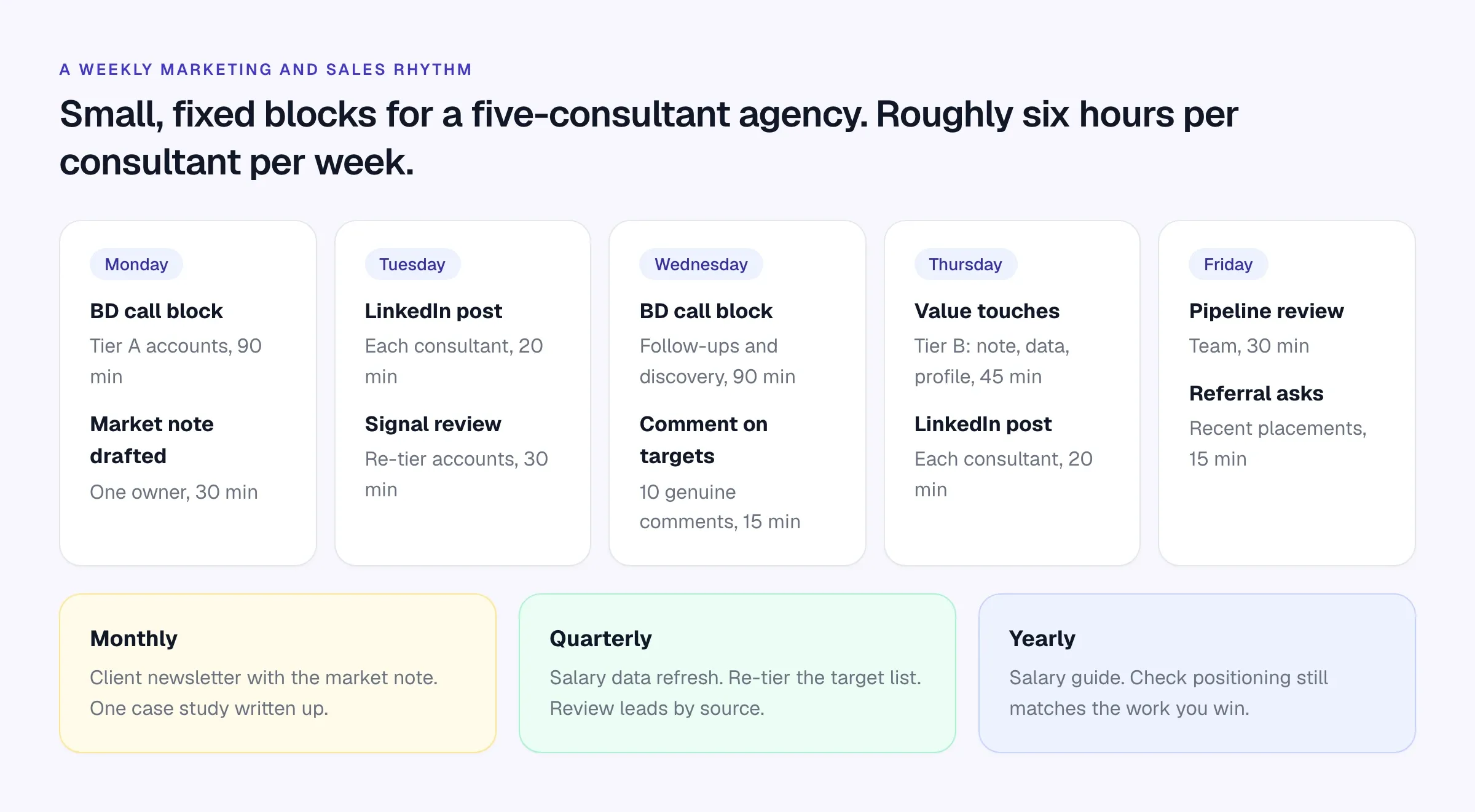
Assign one owner for the monthly market note and newsletter. Everyone else contributes data and posts. Review the rhythm monthly; if a block keeps getting skipped, make it smaller rather than dropping it.
9. Measure what turns into briefs
Reach matters when it leads to conversations with the right hiring managers. Track the chain from activity to fees, by source.
Scroll the table to see all columns →
| Layer | Measure | Why it matters |
|---|---|---|
| Reach | Profile views and replies from target accounts | Are the right people seeing you? |
| Leads | Inbound enquiries, guide downloads, referral introductions | Is marketing creating conversations? |
| Sales | BD conversations, discovery calls, terms signed | Is the team converting attention into briefs? |
| Results | Briefs, placements and fees by original source | Which channels pay for themselves? |
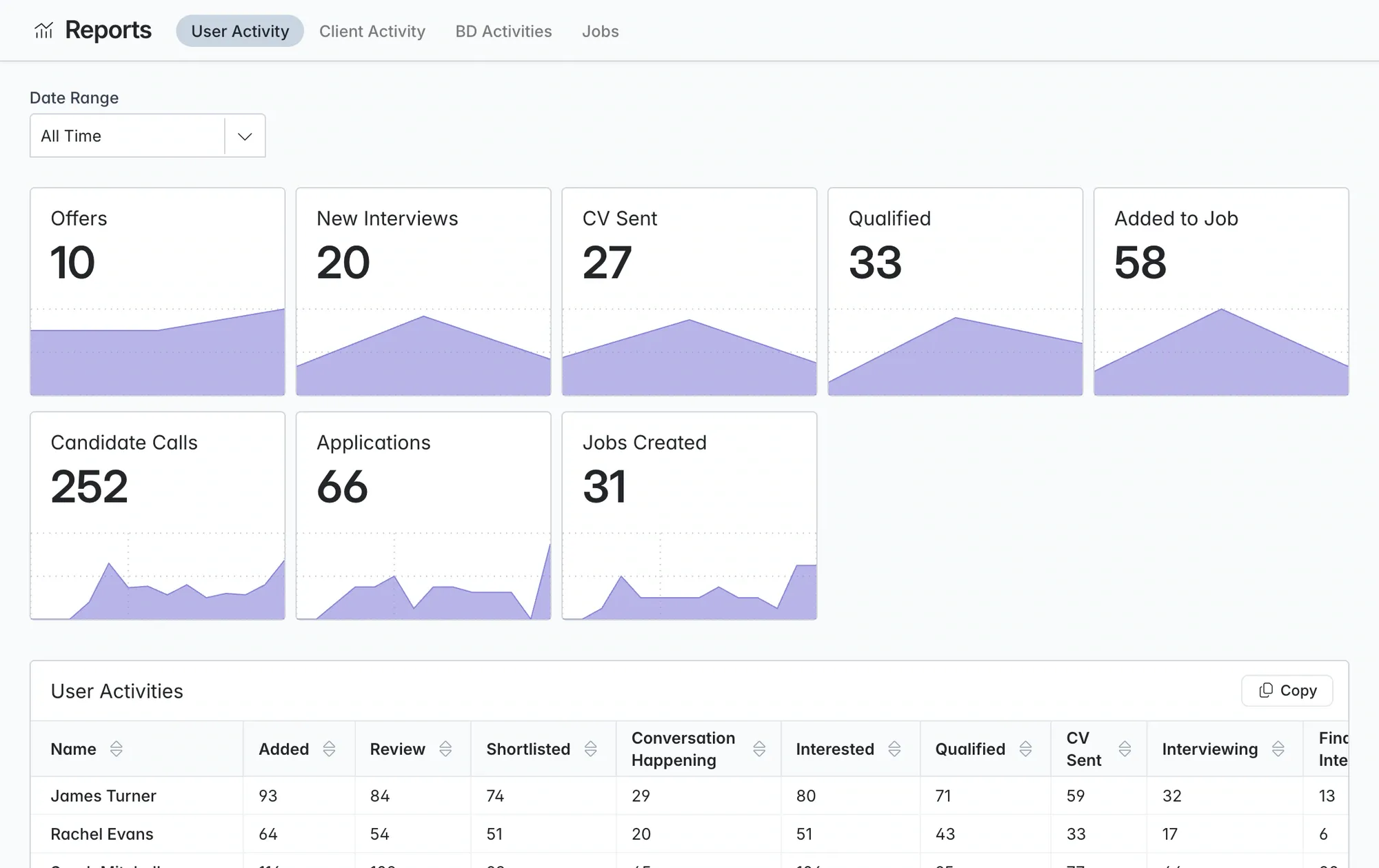
Record the source on every lead and opportunity in the CRM, or this table can’t be built. The agency KPI scorecard covers definitions and a weekly review, and recruitment reporting in Longlist shows BD activity and client pipeline views by consultant.
What to skip
- Generic content. “Top 10 interview tips” competes with thousands of identical posts and doesn’t help hiring managers.
- Bought contact lists blasted with the same email. It hurts your domain’s reputation, and in the UK and EU it can break data protection rules.
- Paid ads before positioning. Ads amplify a message; if the message is vague, you pay to be forgettable.
- Posting as the company only. People respond to people.
- Marketing without a sales follow-up. A downloaded salary guide that nobody calls about is a missed conversation.
For the bigger picture on scaling past your own desk, see growing a recruitment business. If you’re still setting up, how to start a recruitment agency covers the earlier decisions.