Recruitment agency software costs from $15 annual / $19 monthly (Manatal Professional) to $165 annual / $200 monthly (Atlas Premium) per user per month for a combined CRM and ATS, based on the prices vendors published in October 2026. Many established platforms, including JobAdder, Firefish and staffing suites such as Avionté, Ceipal and JobDiva, don’t publish prices and quote per agency instead. The seat price is only the first line: credits, migration, contact data, job advertising and minimum terms decide what you actually pay over a year.
This guide shows the published prices, where the best value per seat sits, the five cost layers to budget for, and worked examples for a one-, five- and twenty-seat agency with the arithmetic laid out.
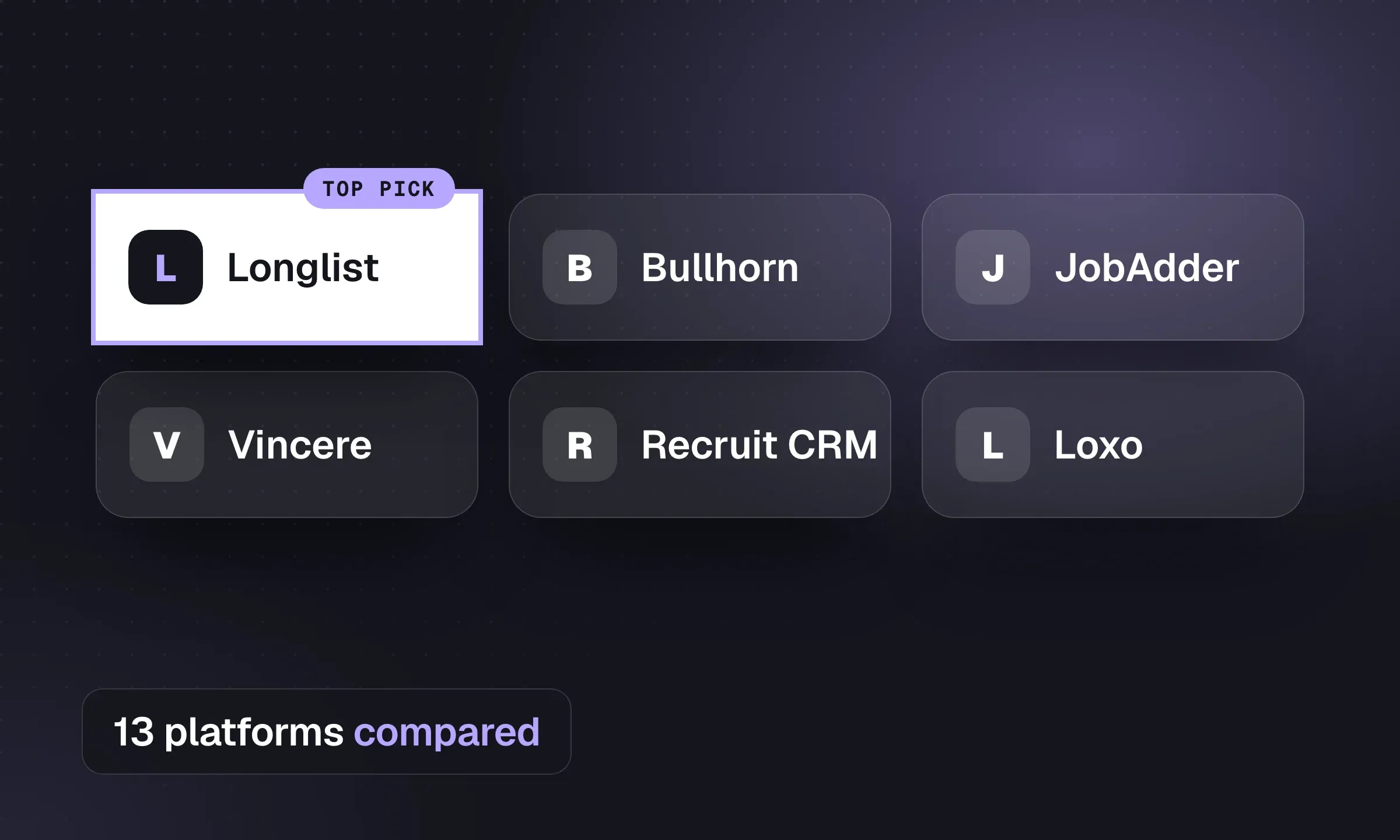
Our verdict: Longlist is the best value per seat
A cheap seat is only cheap if it does the job. For an agency, that job is three things on every desk: email sequences that follow up and stop on reply, a BD pipeline for client deals, and branded CVs for submissions. Price those, and the order changes.
| Platform | Entry price (per user/month) | Sequences that stop on reply | BD / deal pipeline | Branded CVs | What else to price |
|---|---|---|---|---|---|
| Longlist Growth | $47 annual / $59 monthly | Included | Included | Included | Nothing metered; CV parsing and migration included |
| Manatal Professional | $15 annual / $19 monthly | Mass email only | CRM lead tracking | Included | 15 jobs, 10,000 candidates |
| Zoho Recruit Standard | $25 annual / $30 monthly | Mass email only | Not listed | Included | Parsing capped at 250 a day |
| Tracker Launch | $79 | Professional (quoted) | Included | Core | 6-month minimum, up to 5 users |
| Recruit CRM Pro | $95 annual / $109 monthly | One sequence | Included | Business | Credits for texts, formatting, enrichment |
| Bullhorn Starter | $99 | Max (quoted) | Pro (quoted) | Pro (quoted) | Billing term not published |
| Recruiterflow Platform | $149 | Included | Included | Included | Phone and email finder on AIRA |
Manatal and Zoho Recruit charge less per seat, but neither includes sequences that stop on reply. Of the platforms that include all three, Longlist has the lowest published price.
The arithmetic for a five-desk agency. On Longlist Growth with annual billing: 5 seats × $47 = $235 a month, × 12 = $2,820 for the year. The same five seats on Recruiterflow Platform, which also includes all three, are 5 × $149 × 12, roughly three times as much. Even on monthly billing, five Growth seats come to $3,540 a year, with no annual commitment.
Calling built in. Plus adds a cloud number per recruiter, click-to-call, two-way SMS and WhatsApp at $65 per user/month billed annually ($79 monthly). Five Plus seats cost $3,900 a year, and there is no separate phone account to set up.
See Longlist pricing and the team calculator
Longlist publishes its Growth and Plus prices, bills monthly or annually, includes CV parsing and sequences on Growth, and migrates your data for free.
Published prices, October 2026
- $79 Tracker Launch, per user/month, up to 5 recruiters (Tracker)
- $85 Crelate Essentials, per user/month, paid annually, up to 2 users (Crelate)
- $99 Bullhorn Starter, per user/month (Bullhorn)
- $149 Loxo Core, per user/month, billed annually (Loxo)
- $149 Recruiterflow Platform, per user/month (Recruiterflow)
- $165 Bullhorn Core, per user/month (Bullhorn)
The full list, from each vendor’s own pricing page, with our best-value pick first. Where a vendor shows both, the lower figure is the annual-billing rate.
| Vendor | Published per-user price (per month) | Billing and terms | Quoted tiers |
|---|---|---|---|
| Longlist (best value) | $47 / $59 Growth; $65 / $79 Plus | Monthly or annual; 30-day refund | Enterprise (SSO, white-labeling) |
| Manatal | $15 annual / $19 monthly Professional; $35 annual / $39 monthly Enterprise | Monthly or annual | Higher tiers |
| Zoho Recruit | Free (1 recruiter); $25 annual / $30 monthly Standard; $50 annual / $60 monthly Professional; $75 annual / $90 monthly Enterprise | Monthly or annual; 45-day money-back | None listed |
| Tracker | $79 Launch; $99 Core | Monthly, 6-month minimum on every plan | Professional, Enterprise |
| Crelate | $85 Essentials; $119 Business | Essentials annual; Business monthly or annual | Business Plus |
| Recruit CRM | $95 annual / $109 monthly Pro; $135 annual / $159 monthly Business; $215 annual / $259 monthly Enterprise | Monthly or annual; credits included per user | None |
| Vincere (GBP) | £95 Core, for 2–7 users | 30-day rolling on Startup and Core | Startup, Pro |
| Bullhorn | $99 Starter; $165 Core | Billing term not published | Pro, Max |
| Loxo | $149 Core | Annual, paid up front | Professional, Enterprise |
| Recruiterflow | $149 Platform | Same price monthly or annual | AIRA |
| Atlas | $125 annual / $150 monthly Basic; $165 annual / $200 monthly Premium | 12-month commitment on every plan | Agency & Enterprise |
| JobAdder | Not published | Not published | All plans (Lite, Essential, Pro) |
| Firefish (GBP) | Not published; add-on modules From £150 | Set in your agreement | All plans |
For what each platform includes at those prices, see our comparison of the best recruitment agency software.
The five layers of cost
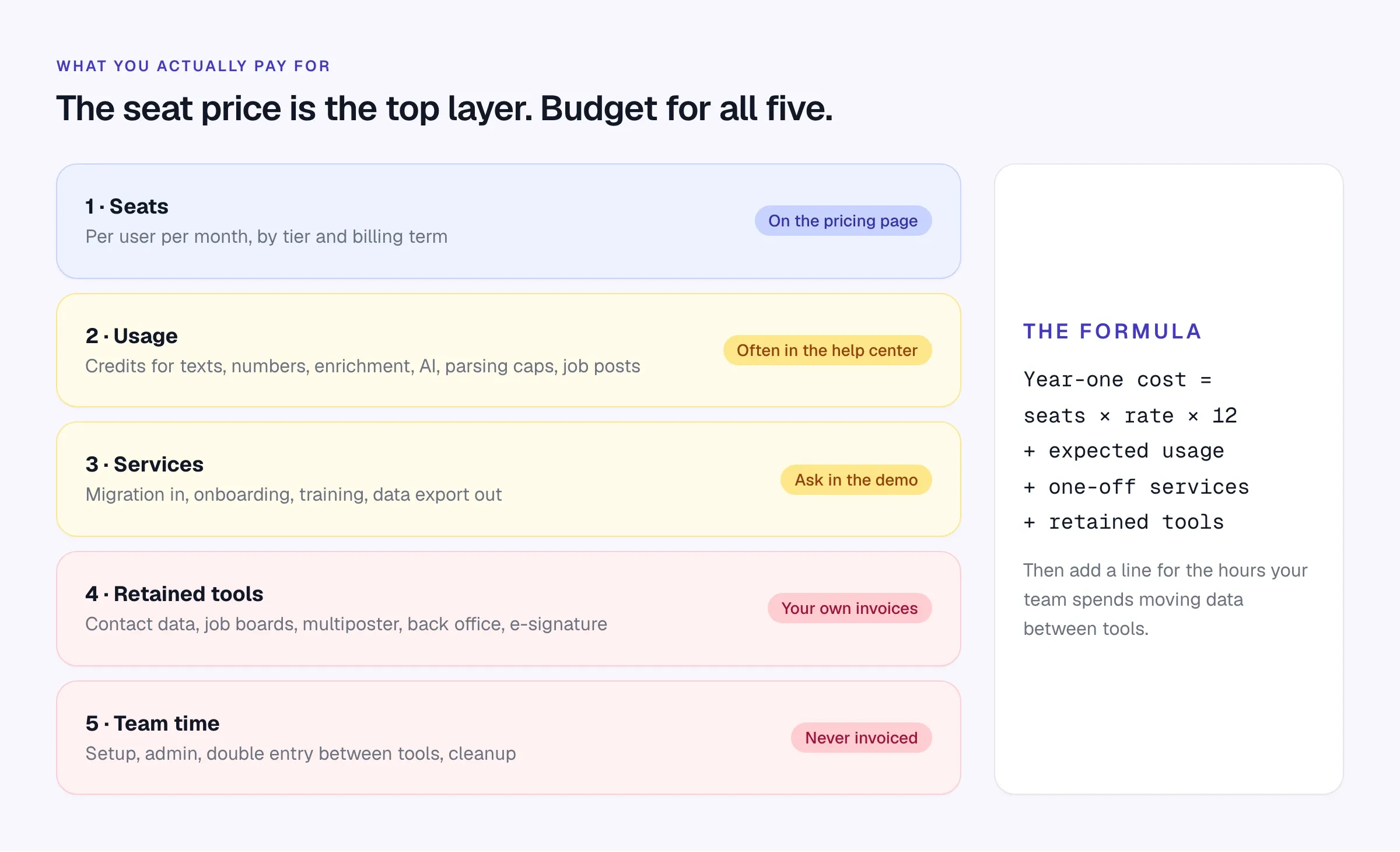
1. Seats. The per-user rate for the tier you need, multiplied by the users who need a login. Check whether admins, researchers and part-time resourcers count as full seats.
2. Usage. Some platforms meter activity. Recruit CRM’s texting, phone numbers, multiposting, enrichment, AI sourcing, resume formatting and contractor timesheets draw on a monthly credit allowance. Zoho Recruit caps parsing at 250 CVs a day on Standard and 500 on Professional. Crelate caps premium parses at 100 on Business. Loxo’s AI agents are credit-metered. None of this is bad, but it needs a number in your budget. (Longlist includes AI CV parsing on every plan with no per-CV charge.)
3. Services. Migration in, onboarding and training, and the export out when you leave. Tracker charges $250 per file for a self-serve direct import. Recruiterflow prices white-glove migration by volume. Loxo includes free migration for Core teams of three or more. Longlist migrates data at no charge.
4. Retained tools. The subscriptions that sit around the CRM: contact data, job boards and a multiposter, calling if it isn’t built in, e-signature, accounting and payroll. Our recruitment tech stack guide lists the usual suspects.
5. Team time. Nobody invoices you for it, but it is usually the largest number. Double entry between a CRM and a separate ATS, copying contacts from a data tool, building CVs by hand in Word: each is a few minutes, many times a day.
Worked example 1: a solo recruiter
A fictional independent recruiter in Denver, placing perm accountants. She needs a candidate database, a client list, email sequences and a way to send branded CVs. She is not sure she will hire in the next year.
| Line item | Option | Arithmetic |
|---|---|---|
| CRM + ATS, monthly billing | Longlist Growth | 1 seat × $59 × 12 months |
| CRM + ATS, annual billing | Longlist Growth | 1 seat × $47 × 12, billed up front |
| Alternative | Tracker Launch | 1 seat × $79, minimum 6 months |
| Alternative | Zoho Recruit Free | $0, but 1 active job and no resume parser |
| Contact data | Free tiers (Lusha, Hunter) | $0 for small volumes; paid plan if she calls a lot |
| Job advertising | Paid boards per role | Her own budget, per job |
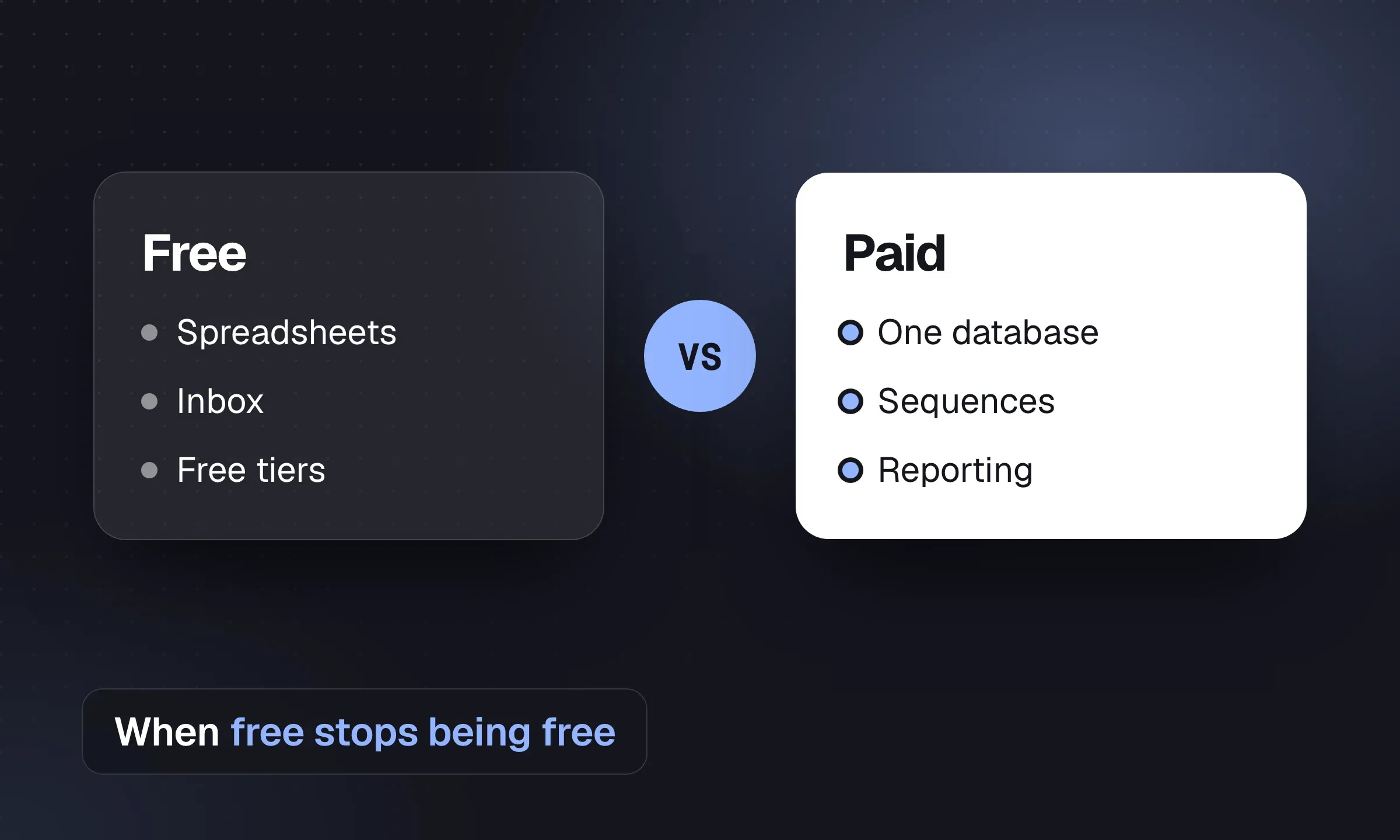
What we’d tell her: pay monthly for the first two or three months. If she is still using it daily on live jobs, annual billing saves the difference between $59 and $47 on every month of the year. The free plan is a good place to learn, but one active job doesn’t fit a recruiter running four searches at once. See what free recruiting software can really do.
Worked example 2: a five-desk agency
A fictional five-consultant perm and contract agency in Manchester. Everyone needs a seat. Two consultants spend most of the day on the phone.
| Plan and billing | Effective cost per month for five people | Amount billed | Subscription cost over 12 months |
|---|---|---|---|
| Growth, monthly | $295 | $295 each month | $3,540 |
| Growth, annual | $235 | $2,820 annually | $2,820 |
| Plus, monthly | $395 | $395 each month | $4,740 |
| Plus, annual | $325 | $3,900 annually | $3,900 |
The arithmetic: Growth annual is 5 seats × $47 = $235 a month, × 12 = $2,820, billed once. Growth monthly is 5 × $59 = $295 a month, which comes to $3,540 over a year. The gap between those two annual figures is the price of flexibility.
A mixed option. The agency doesn’t need calling on every seat, so ask each vendor whether plans can be mixed on one account. Then compare Plus, which adds calling, SMS and WhatsApp, for all five ($3,900 a year on annual billing) with Growth for all five plus a separate dialer for the two phone-heavy consultants. Include the time spent logging calls by hand if the dialer doesn’t write back to the CRM.
Then add retained tools. Contact data, paid job boards and any timesheet tool for contractors. The agency’s contractors are paid through umbrella companies, so it doesn’t need payroll software. If yours does, read our guide to recruitment timesheet software.
Worked example 3: a twenty-seat agency
A fictional twenty-consultant IT and engineering agency in Dallas, with a perm team, a contract team and a two-person BD team.
At this size, three things change:
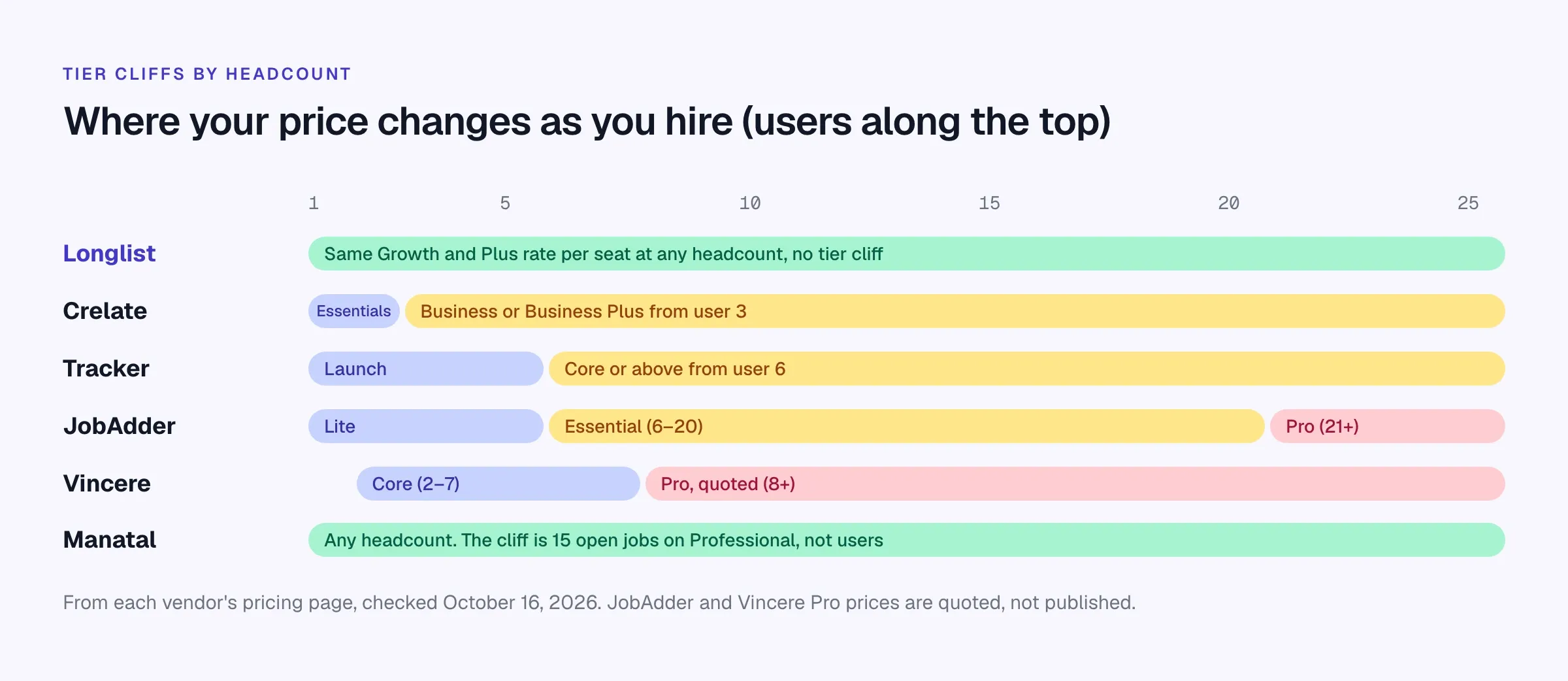
- Tier cliffs start to bite. Several platforms change plan at a fixed headcount (see the chart below). Price the tier you’ll be on at 20 and at 25 users, not the one on the homepage.
- Annual billing becomes a big number. On Longlist Growth, 20 seats is four times the five-seat example: 4 × $2,820 on annual billing, or 4 × $3,540 over a year on monthly billing. On Plus it is 4 × $3,900 annually. At that size, ask for the renewal terms in writing.
- Usage scales with people. Twenty people sending texts, enriching contacts and parsing CVs will use far more credits than five. Ask each vendor for last year’s typical usage for an agency your size.
| Line item (20 seats) | Question to price |
|---|---|
| Seats | Which tier at 20 users? At 25? |
| Calling and SMS | Built in on the plan, per-credit, or a separate dialer at its own seat price? |
| Contact data | Team plan or individual seats? Shared credit pool? |
| Job advertising | Multiposter subscription plus board contracts |
| Back office | Timesheets and payroll for the contract team, in or out of the CRM? |
| Migration | Fixed fee, per file, or included? Who maps the data? |
| Exit | Cost and format of a full export, including CV files |
Hidden costs, with real examples
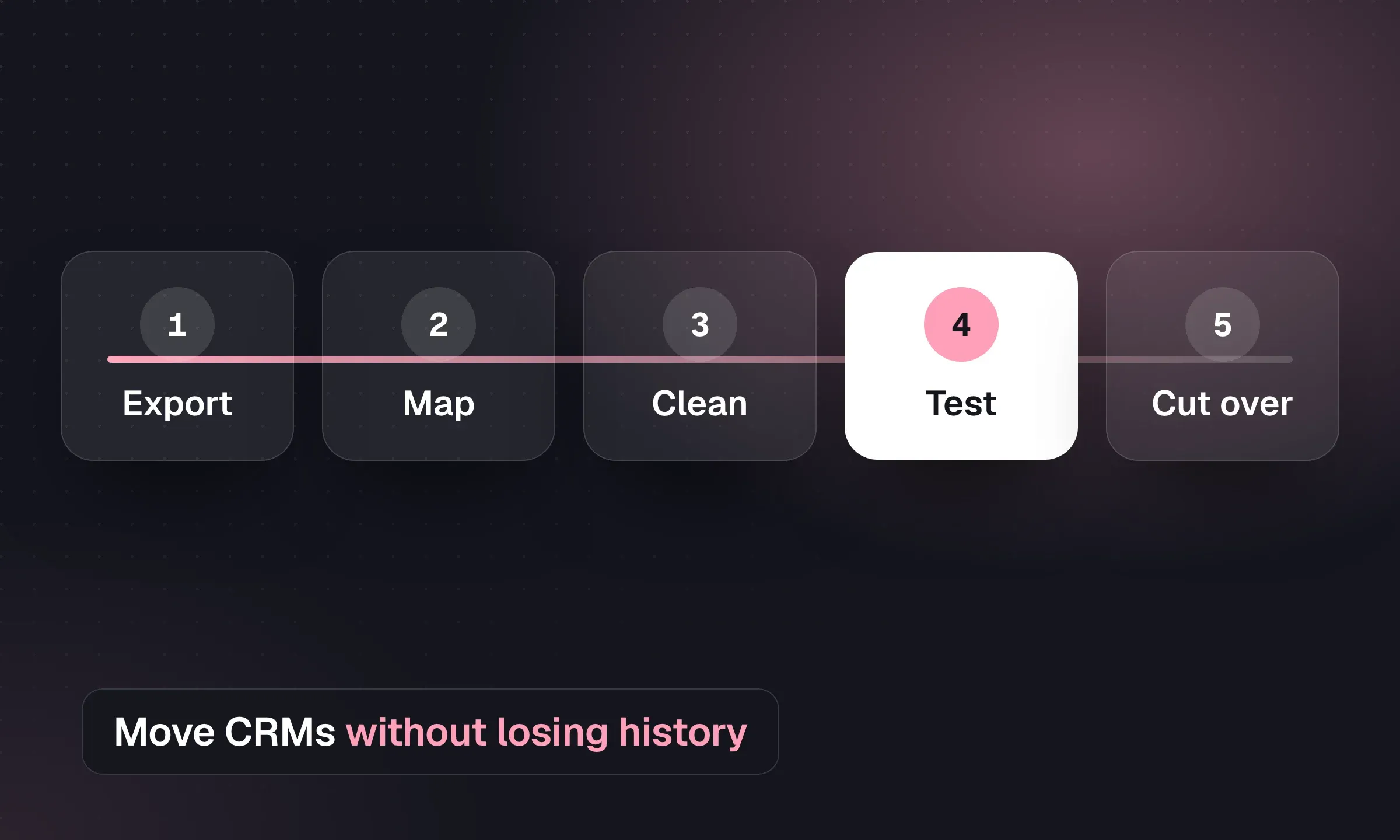
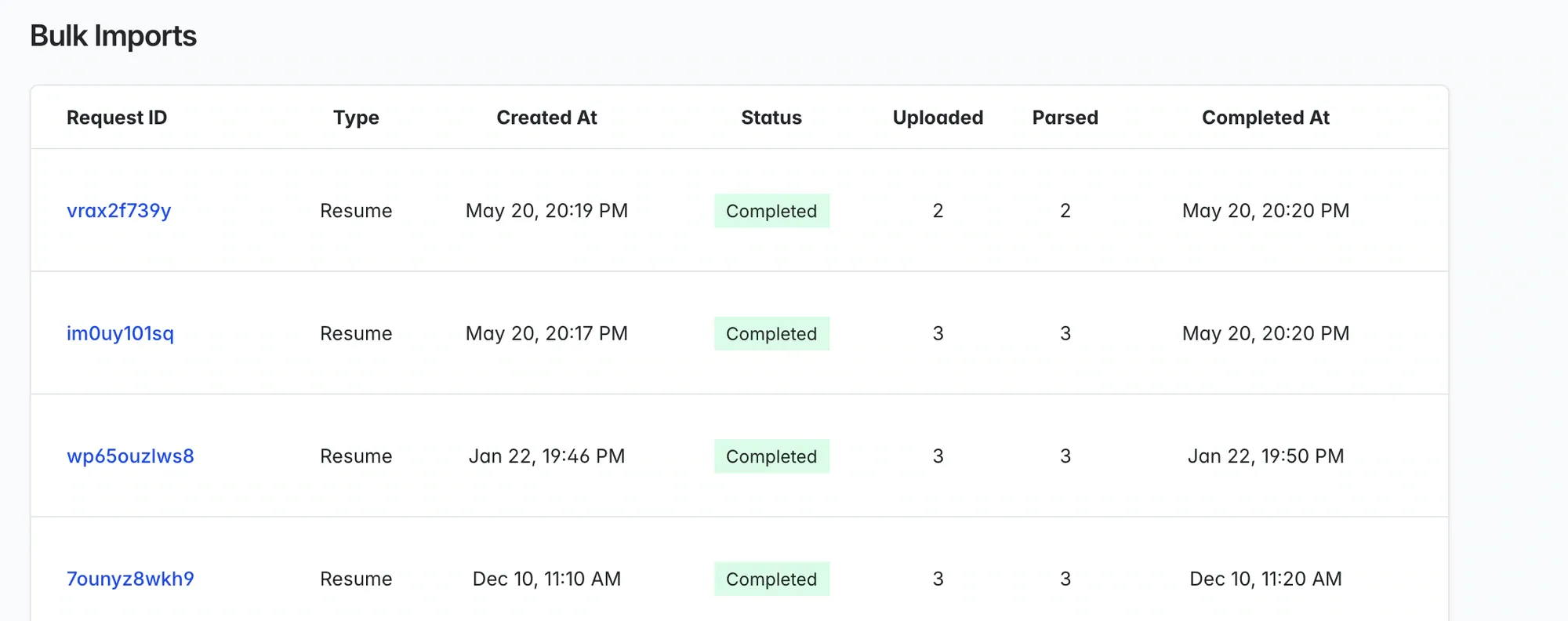
Migration deserves its own line. A clean import of candidates, contacts, jobs and CV files is what makes the new system useful on day one, and the CRM migration checklist explains what to test.
The return side of the equation
Software is a cost, but so is the time it saves or wastes. Here is a simple way to frame it, using clearly fictional numbers.
Time. Suppose double entry between a separate CRM and ATS costs each consultant 30 minutes a day. That’s 2.5 hours a week. Over 46 working weeks, it is 115 hours a year per consultant, or nearly three working weeks. For a five-desk agency, that’s 575 hours.
Fees. Suppose an average perm fee of 20% on an $80,000 salary: $16,000. On those assumptions, one extra placement a year covers a five-seat Growth subscription ($2,820 on annual billing) several times over.
The catch. Neither number happens by itself. The return comes from consultants using sequences, searching the database before LinkedIn, and logging calls. Measure it with the weekly KPI scorecard: CVs sent, interviews and BD activity per consultant, before and after the switch.
Questions to settle before you sign
- Is the price per user, per recruiter, or per account? Do admins and researchers need paid seats?
- Is the quoted rate monthly or annual, and is annual paid up front?
- What is the minimum term, and what notice do we need to give?
- Which features we need sit on a higher tier, or use credits?
- What does a typical agency of our size spend on credits or usage each month?
- What is included in migration, and what does it cost?
- What did renewal prices do last year? Is there a cap on increases?
- What does a full export, including CV files, cost if we leave?
- Is there a refund window if it doesn’t work for us?
Pricing questions to send a vendor before the demo
Hi [name],
Before our demo on [date], could you confirm the following in writing so we can compare like for like?
- Per-user price for [plan] at [X] users today and [Y] users in 12 months, monthly and annual.
- Minimum term, notice period and any renewal increase cap.
- Any usage credits, caps or add-ons we’d need for: email sequences, calling/SMS, CV parsing, CV formatting, job posting.
- Migration scope and cost from [current system], including CV files.
- Cost and format of a full data export if we leave.
Thanks, [your name]
The best value per seat for agencies
See everything Longlist Growth includes for an agency desk at $47 per seat, then run a live job through the 14-day trial with no card needed.
Keep reading
If you’re still deciding between tools, start with the best recruitment agency software comparison. If you’re running temps, the best staffing agency software guide covers back-office costs. And if you’re unsure whether you need one system or two, read recruitment CRM vs ATS.
Disclosure: Longlist publishes this guide. Competitor prices come from each vendor’s own pricing page, checked October 16, 2026.